
Laura C. Wright’s dye gardens connect people to our water system
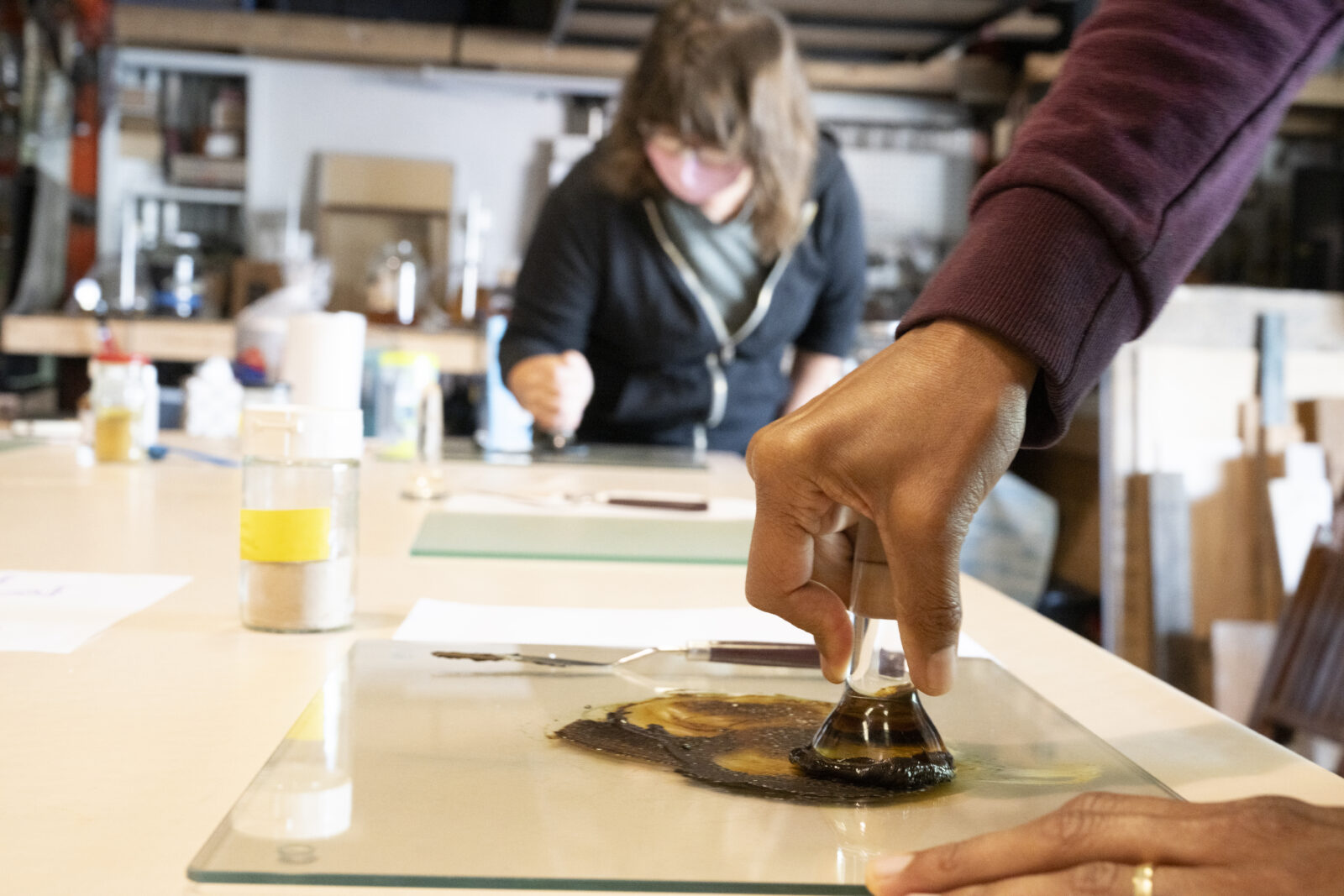
One person working on a piece in the background with a hand smearing brown paint in the foreground
A watercolor-making workshop with Duwamish Valley Youth Corps. Laura C. Wright. waterplant, 2024. Seattle, WA. King County Public Art Collection. Photo: Timothy Aguero Photography

Last year, artist Laura C. Wright embarked on a months-long endeavor to plant a pair of dye gardens in Seattle’s Duwamish Valley and then harvest plants to make pigments for creating watercolor paints.

Commissioned by 4Culture and King County Wastewater Treatment Division (WTD), Wright’s waterplant was conceived to raise awareness about what happens when the area’s stormwater and wastewater systems are overwhelmed by heavy rains: With nowhere else to go, they currently overflow into the Duwamish River, causing harm to its flora and fauna. waterplant was a prelude to a big change getting underway this year: WTD’s new West Duwamish Wet Weather Storage Facility, which will hold stormwater and wastewater during large storm events and then divert it to West Point Treatment Plant for filtration before it’s released into the Puget Sound.

In spring, with help from members of the Georgetown Youth Council, Wright planted the Pacific Northwest Native Plant dye garden at Gateway Park North. She then planted the Georgetown Steam Plant dye garden with flowers of historical and cultural value. Plants are good for regulating stormwater runoff!
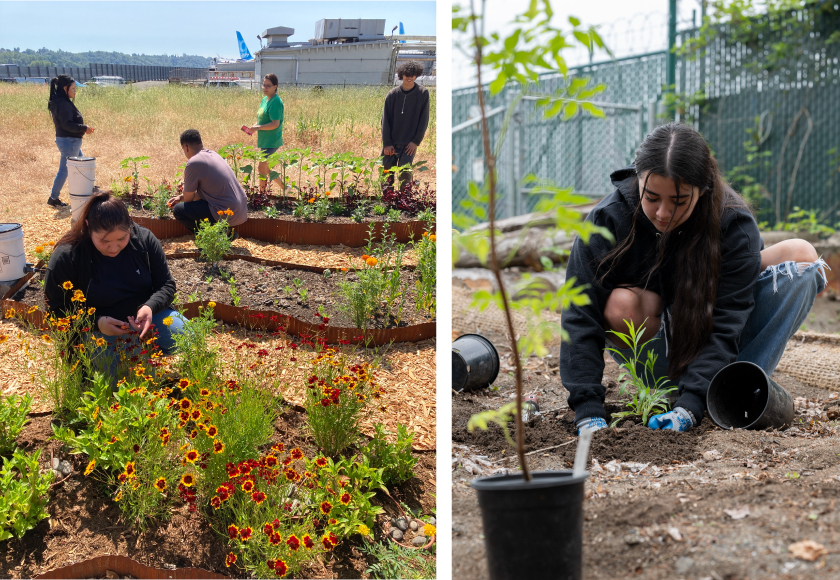
Two photos: On the left, several people work in a colorful garden next to an airport. On the right, a young woman wearing gloves kneels on the ground, planting a small sapling near a fence.
LEFT: A group from the Duwamish Valley Youth Corps forages for plants at the Georgetown Steam Plant dye garden. Laura C. Wright. waterplant, 2024. Seattle, WA. King County Public Art Collection. Photo: 4Culture. RIGHT: Members of the Georgetown Youth Council participate in a planting workshop at the Gateway Park North dye garden. Laura C. Wright. waterplant, 2024. Seattle, WA. King County Public Art Collection. Photo: Timothy Aguero Photography

As summer arrived, Wright led foraging and pigment-making workshops with the Duwamish Valley Youth Corps, Georgetown Youth Council, and the general public. Participants learned how to ethically forage plants from the Duwamish Greenbelt, which sits on a hill west of the Duwamish River and is Seattle’s largest remaining contiguous forest—500 acres! After foraging, the groups went back to Wright’s studio to process the plants.
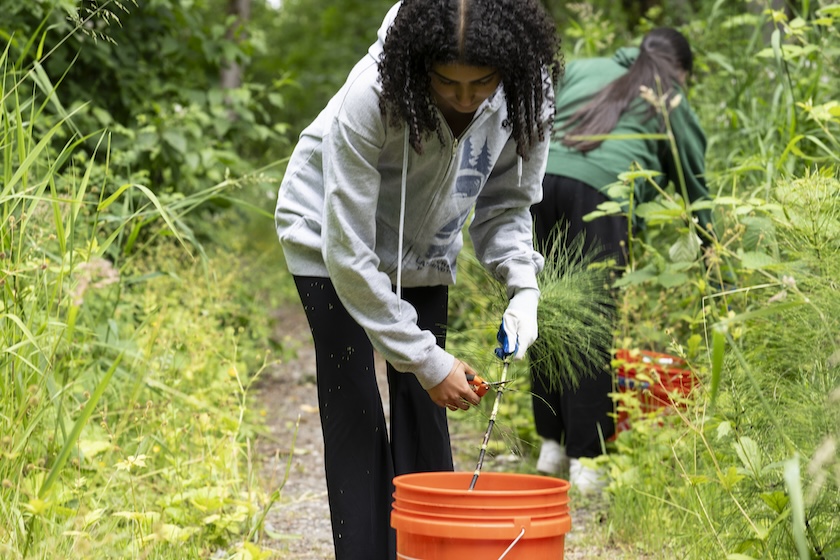
A person wearing a gray hoodie and gloves is bending over, cutting plants and placing them into an orange bucket on a grassy path. Another person in a green jacket is in the background, also working with plants.
A member of the Georgetown Youth Council forages for plants in the Duwamish Greenbelt. Laura C. Wright. waterplant, 2024. Seattle, WA. King County Public Art Collection. Photo: Timothy Aguero Photography

The pigment-making process uses a technique similar to WTD’s water filtration methods, offering insight into the water system in the Duwamish Valley.
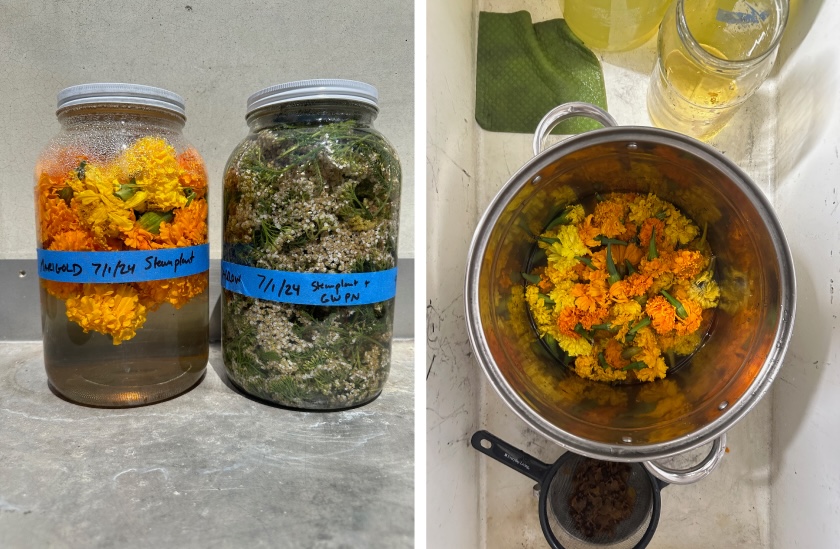
Two glass jars with flowers and herbs infusing in liquid, labeled “7/1/24.” Next to them, a pot filled with orange marigold flowers sits in a sink beside a strainer and a small bowl with brown residue.
Dye baths. Laura C. Wright. waterplant, 2024. Seattle, WA. King County Public Art Collection. Photo: Timothy Aguero Photography

Later in the summer, WTD staff led a tour of the brand-new Georgetown Wet Weather Treatment Station, specifically for residents of Georgetown and South Park. There, participants learned about the lifecycle of water and treatment process.
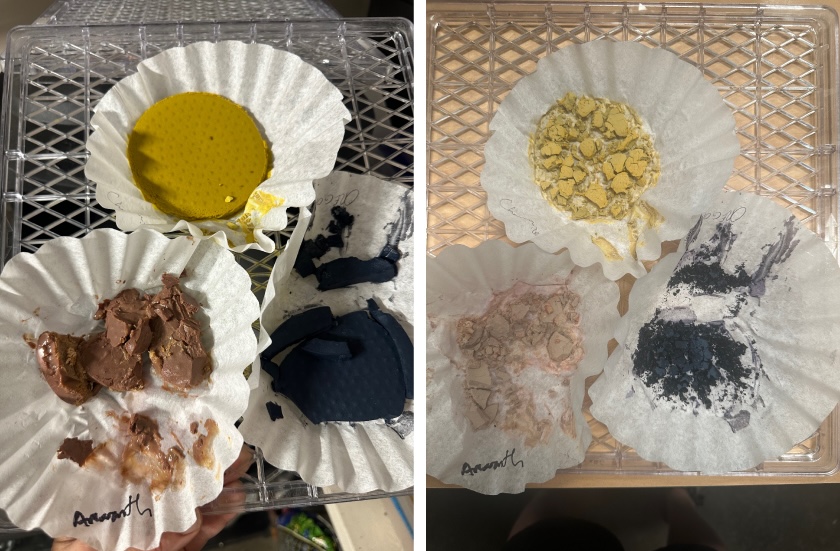
Four coffee filters labeled “Azimuth” each hold different substances: one with yellow liquid, one with dark blue, one with brown, and one with beige. The left image shows them fresh; the right, after drying.
Plant pigments. Laura C. Wright. waterplant, 2024. Seattle, WA. King County Public Art Collection. Photo: Timothy Aguero Photography

A series of additional workshops in August began with a walk through the Georgetown Steam Plant dye garden. Participants then returned to Wright’s studio to learn how to extract pigment and make watercolor paints.
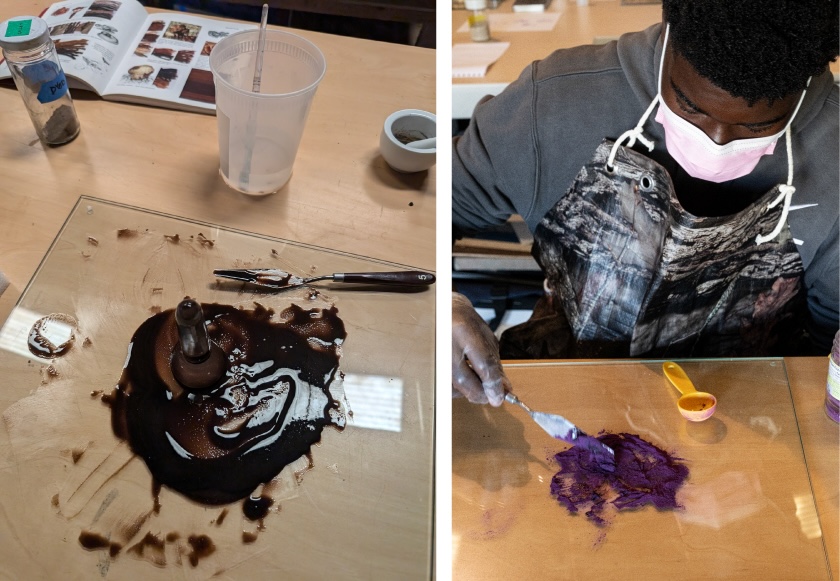
Left: A glass palette with dark brown paint, spatulas, and art tools on a table. Right: A person wearing an apron and pink mask mixes purple paint with a spatula on a glass surface. Art supplies are scattered on the table.
A watercolor-making workshop with Duwamish Valley Youth Corps. Laura C. Wright. waterplant, 2024. Seattle, WA. King County Public Art Collection. Photo: Timothy Aguero Photography

Everyone who participated in workshops went home with watercolors they and other workshop participants made.
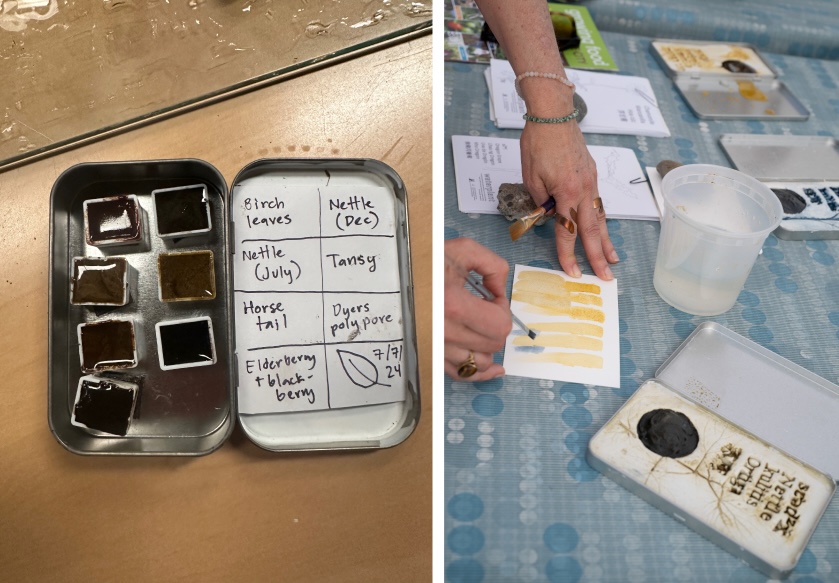
Left: A metal tin holding six labeled squares of natural paint. Right: A hand uses a brush to paint yellow swatches on paper, with painting materials and mixing containers on a blue tablecloth.
LEFT: Paints made during a watercolor-making workshop with Duwamish Valley Youth Corps. Laura C. Wright. waterplant, 2024. Seattle, WA. King County Public Art Collection. Photo: Timothy Aguero Photography. RIGHT: Painting with watercolor. Laura C. Wright. waterplant, 2024. Seattle, WA. King County Public Art Collection. Photo: Timothy Aguero Photography

Reaching the end of waterplant’s series of temporary engagements, Wright distributed sample watercolors and offered a painting station at community events, including the Duwamish River Festival, the Georgetown Steam Plant Science Fair, and the Georgetown Garden Walk. She has since created a coloring book that both explains the lifecycle of water in the city and provides instructions for making watercolor pigments from plants at home. We encourage you to download it and consider growing and harvesting your own dye gardens!