Clare Johnson’s Post-it Notes: The Enduring Magic of the Disposable
Clare Johnson loves Post-it notes. “I think a lot of people love Post-its. They’re a beloved common object,” she says. Fascinated by their dichotomous and sometimes contradictory purpose—they’re meant to preserve urgent information and important ideas, yet they’re disposable and almost always end up in the trash—Johnson has been subverting their use for decades.
“I had gone through a big loss after a friend died suddenly. I was struggling to make art at the time. So I was feeling vulnerable and not really wanting to go into the studio. And I wasn’t able to go back right away to what I had been working on before [the loss]. For whatever reason, the way I finally got back into painting was by doing these tiny paintings on Post-it notes. I just did a few. They were very abstract—a sort of record of my emotional state. I was just trying to get through and create anything. At the time I thought I’d leave them in library books for people to find—sort of a way of connecting with strangers.”
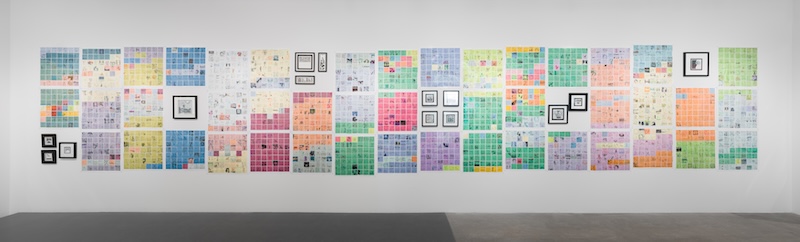
Attempts to formalize the work into a cohesive project had a few false starts, and it was actively discouraged by an advisor in grad school, thinking it would distract Clare from her painting. Yet Johnson remained committed to the concept, seeing the rich and rewarding potential in creating a visual record of a life lived in real time. Ever since, Johnson has ended every day by drawing on a Post-it note, using imagery and words to archive life’s fleeting moments, feelings, and memories. The content is fluid, ranging from different emotional states or physical pains to drawings of mundane or hilarious moments captured throughout the day—like looking down from a bridge to witness a lone stranger proudly sunning himself on his speedboat, or repeatedly mistaking a streetlamp for the moon on her walks home. Johnson maintains a deliberate flexibility, allowing the style to vary from night to night.
The current exhibition at Gallery 4Culture gathers these fleeting moments in the artist’s daily life, transforming the ephemeral Post-it note into a vehicle for profound introspection and universal connection. Visitors to the gallery will immediately notice the staggering scale of the work, comprising more than 6,500 Post-its, along with paintings and small ink drawings. The Post-its are organized into over one hundred panels, each containing 49 individual notes representing a period spanning nearly the entirety of Johnson’s adult life.
The one-note-per-night guidepost is a core constraint, but Johnson isn’t interested in a ritual so rigid that it falls apart when it needs to change. On days that feel “super full” or intense, she may break the rule to sketch two or three notes, creating space for unique rhythm of individual days. The notes are archived chronologically in sketch pads, serving as a sort of graphic memoir created in real-time, which Johnson notes prevents the retrospective editing of her personal story.
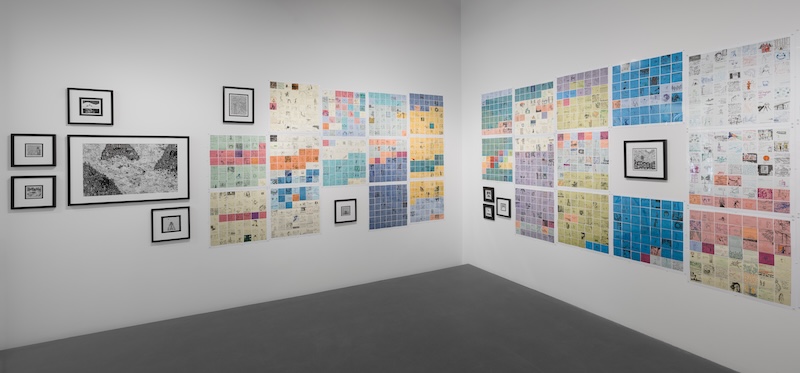
The Post-it project is rooted in the idea of holding opposites together. The very nature of the medium—designed to be temporary and disposable—is subverted by the artist’s commitment to saving it forever. Johnson relates this contradiction to the dual experience of being a queer person, who can feel both vulnerably exposed and invisible at the same time. This act of perpetually documenting one’s life is a deliberate counterpoint to the erasure and suppression of queer history, where evidence of lives has often been destroyed.
Johnson’s work fosters a profound sense of connection. While intensely personal—often featuring context she alone can fully piece together—the work somehow achieves a powerful universality. Johnson hopes the project inspires empathy in viewers by allowing them to recognize a story in her work that rhymes with something in their own life. One subtext of the show is that we can’t possibly document our entire lives. Despite the thousands of notes she’s created over the years, Johnson exposes the truth that each of our lives contain mysteries, and we must learn to be curious about those gaps rather than dismissive of them.
Ultimately, the nightly ritual is a specific tool that helps her transition into rest by setting the day aside. Assembling the full archive of Johnson’s notes also functions as an antidote to the pervasive existential dread many people are currently experiencing by shifting the focus from the macro concerns of the world to micro-moments of daily joy and intrigue that make up the present.
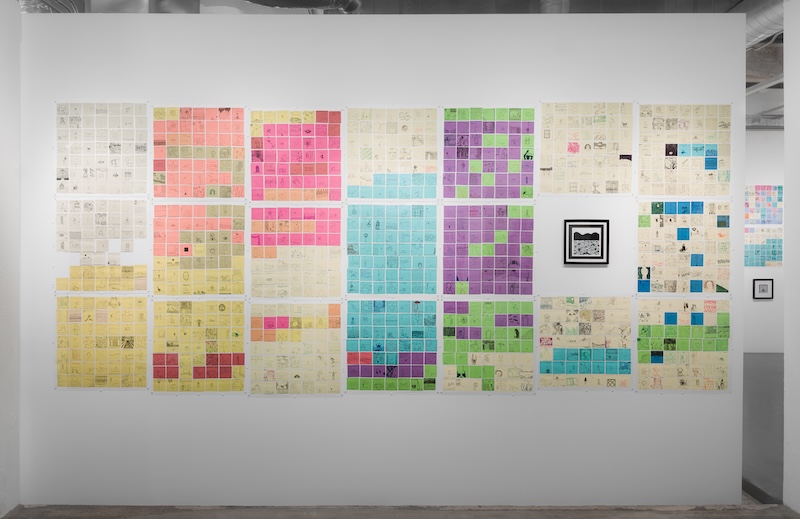
It’s also a reminder of the fallibility of memory. Memory fades—not even Johnson can remember what originally inspired some of the notes and drawings when she revisits them today. And the medium that we choose to preserve our memories often aren’t as effective over time. Paper gets torn, ink runs, and sketches fade. Yet by archiving elusive points in time over the expansive arc of one artist’s life, this project offers a powerful reminder: small moments matter.
Asked what she hopes to inspire by putting this work out there, Johnson says: “If my work can make somebody feel less alone, more connected, more understood, or more curious about other people—curious about the mystery in all of us, rather than scared of it or dismissive of it—that’s really one of the most special things about this. I also hope [this show] helps people think about what they want to save and remember from their days; to think about the ordinary moments that can bring so much joy.”
Clare Johnson is a painter, writer, and public artist whose work celebrates overlooked spaces, histories, and memories. Her honors include fellowships and residencies from Jack Straw, Hugo House, Crosstown Arts, Surel’s Place, and James Castle House. Recent public art projects include an art scavenger hunt on the backs of traffic signs in West Seattle, a permanent supportive housing mural in Burien, and window art in Cal Anderson Park exploring HIV and family—the originals of which are on view in the lobby of Gay City: Seattle’s LGBTQ+ Center. She is editor of the Washington State Queer Poetry Anthology (a free website published in 2025) and the author of two lyric memoirs about growing up queer in Seattle during the AIDS crisis, published through the Department of Neighborhoods’ blog and the free app TrailOff, which pairs her audio narrative with a walking route through Capitol Hill. In 2026-27, Johnson will present a new talk about her sticky note practice through Humanities Washington’s Speakers Bureau at venues across the state.