
Close to the Machine: Afroditi Psarra’s Pythia Embodied asks questions about technology, identity, intimacy, and agency.
If you caught the opening reception of Afroditi Psarra’s Pythia Embodied at Gallery 4Culture in early November, you may have witnessed a moment towards the end of her performance where she asked her wearable oracle, a chatbot, “who has agency?” But the vexing question—which was aimed at asking the machine who really, has the control here—went unanswered.
There was a technical error. And while few noticed the glitch in the moment, this question of agency resides at the heart of Psarra’s show—an interactive experience that provokes questions about identity and our current moment, and that spurs the imagination about different ways of being, both now and in the future.
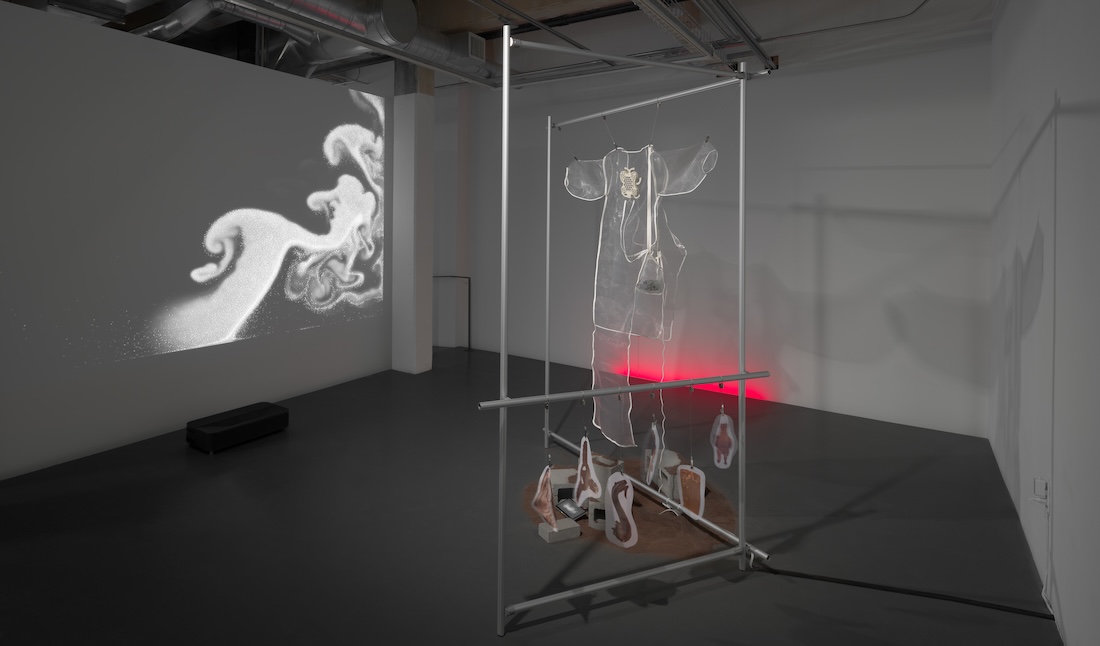
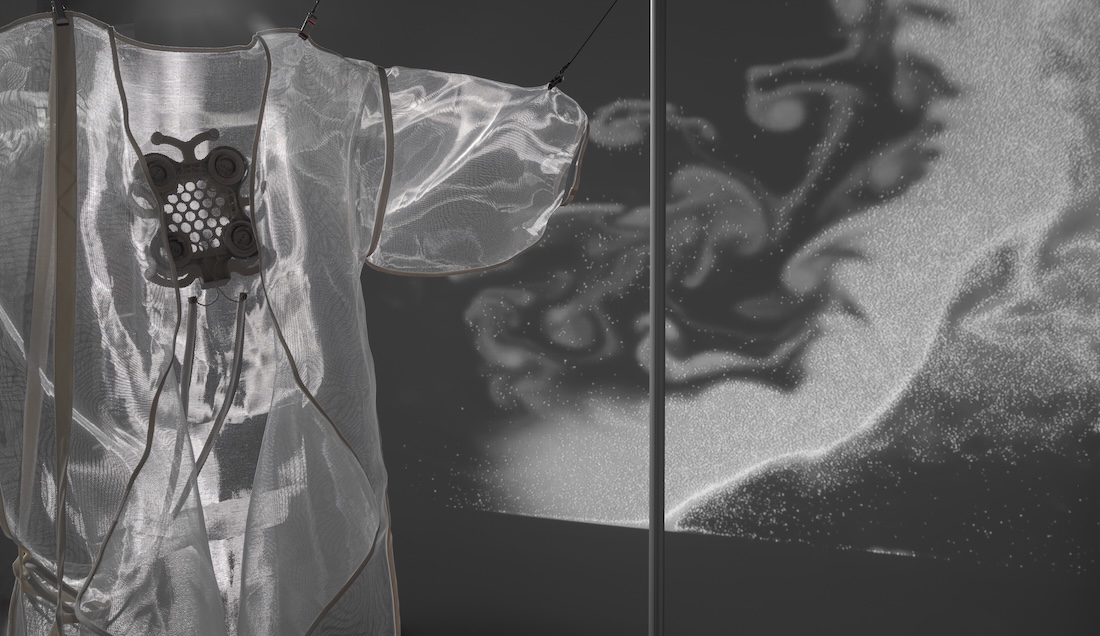
The show exists at the nexus of tradition and tech; and of art and science. Inspired by the Pythia, the priestess associated with prophecy at ancient Delphi, the wearable oracle listens to its surroundings, transcribes speech and sound, and responds aloud. The effect is like hearing a voice emerging from deep within Psarra’s body. During the first performance, she moved through the gallery, bringing the oracle’s quiet voice close to visitors, inviting people not only to watch, but to listen, approach, and ask questions.
While rooted in ancient history, the oracle in Pythia Embodied offers a new way to think about our most transformative current technologies—specifically, how AI can shape our sense of embodiment, autonomy, and the very ways we understand ourselves.
“I do the performance to set the context for the project, because I know that people might not be familiar with the story [of Pythia],” she says. “But also, because this is not just a piece about ancient history. This piece thinks about technology differently. It’s about considering artificial intelligence as something that can be embodied and very personal, very bespoke, very niche, and not what big tech wants us to think that AI is about. It can be spiritual. It can be intimate. It can be all these things.”
Psarra was drawn to computing from a young age and to science fiction, including the cyberpunk writing of William Gibson. While she studied fine art and painting, she became interested in new-media art while in Madrid, where she encountered the work of Medialab-Prado, a global hub for citizen innovation, rooted in participation and collective intelligence methods.
“There were no new-media art degrees when I was an undergrad,” she recalls. “I loved painting, but I felt like I wasn’t such an amazing painter that I would have something to say to the world that hasn’t already been expressed through [the medium] of painting. But I felt like I could achieve that through technology.”
She began exploring artificial intelligence in the intimate spaces of both the body and the home six years ago in a show called Voices and Voids, a collaboration with two colleagues at the University of Washington. The project reimagined interactions with voice assistants. It was during the pandemic, and Psarra notes that “people were locked in, feeling loneliness, and were craving some sort of human interaction or conversation that we couldn’t have. A lot of people were led into buying voice assistants and installing them in their homes. And they started having very surreal interactions with them that were going far beyond just using them to set the alarm or like turn on the lights.”
Psarra thought about how the conversations people were having with voice assistants—conversations in which they shared intimate details about themselves and their lives—had profound implications for our privacy. She began wondering what happens with all the data gleaned from our personal lives and questioning how these technologies might be used in different ways that give people back their control.
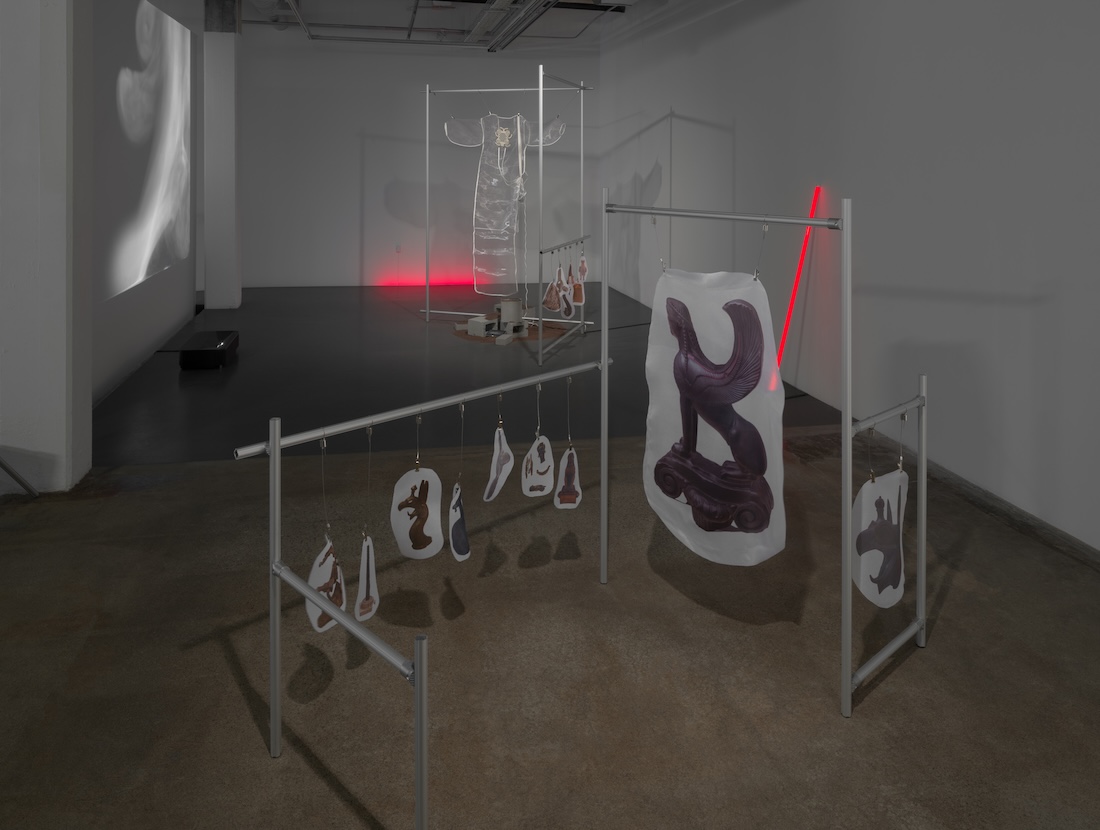
At Gallery 4Culture, the oracle inhabits a space shaped by sound: speech, melody, ambient noise, and moments of silence. The system may respond to gallery sounds as well as visitors’ direct questions. Psarra hopes people listen closely and consider what it means to encounter AI through a body, or within a specific place.
With the ideas of agency and control in mind, she chose an open-source model and designed the oracle to run locally rather than depend on a cloud-based service. On the question of agency, the fact that the AI model resides locally is significant. “You download it onto your computer and the AI lives there, not on the cloud. It doesn’t give your data away when you interact with it… I wanted to build a very custom computer that was intended to do one thing and one thing only, which is to run this AI model that you can interact via voice, and that would be built specifically for this artistic project.”
This approach aims to achieve several goals. One is to have audiences begin to think about different possibilities vis-a-vis building their own technology. Another is to inspire people to own their data by keeping it hyper local. And importantly, the work aspires to spark peoples’ thinking about physicality in novel ways.
“Everybody can learn how to use these technologies at a very basic level,” she says. “And they can start imagining what sort of worlds and what sort of artifacts they want to build with them. For me that is a very liberating and very powerful way to think about technology.”
The planned ending of the performance—which people can catch again on December 3 at Gallery 4Culture as part of the First Thursday Art Walk—makes the question of agency explicit. Psarra prompts the oracle to break character and reveal the system’s underlying parameters and instructions. She hopes the oracle will complete its transformation and expose some of the machinery behind its apparent mystique.
In doing so, Psarra extends an invitation to ask big questions about who has agency, and what kinds of technology we might create if we refuse to accept that our future has already been decided.
“I’ve tried to create an almost sacred space that exudes contemplation. I want people to get in a contemplative state of mind.”
Learn more about Afroditi Psarra and her work.