Art and Stewardship at the South County Recycling & Transfer Station
The South County Recycling & Transfer Station (SCRTS) is now open, offering visitors more than a place to recycle and dispose of waste. Permanent public artworks integrated throughout the site connect the facility to local ecology, Indigenous knowledge, and the labor of the people who built it.
Operated by King County Solid Waste Division, SCRTS replaces the former Algona Transfer Station and serves communities in and around Algona, Auburn, Federal Way, and Pacific. Designed using the Living Building Challenge framework, the site incorporates solar energy, habitat restoration, native plantings, rainwater capture, and other sustainable design features that reflect King County’s commitment to environmental stewardship.
To complement this vision, 4Culture commissioned four regional artists to respond to the place itself—its landscape, history, and purpose.
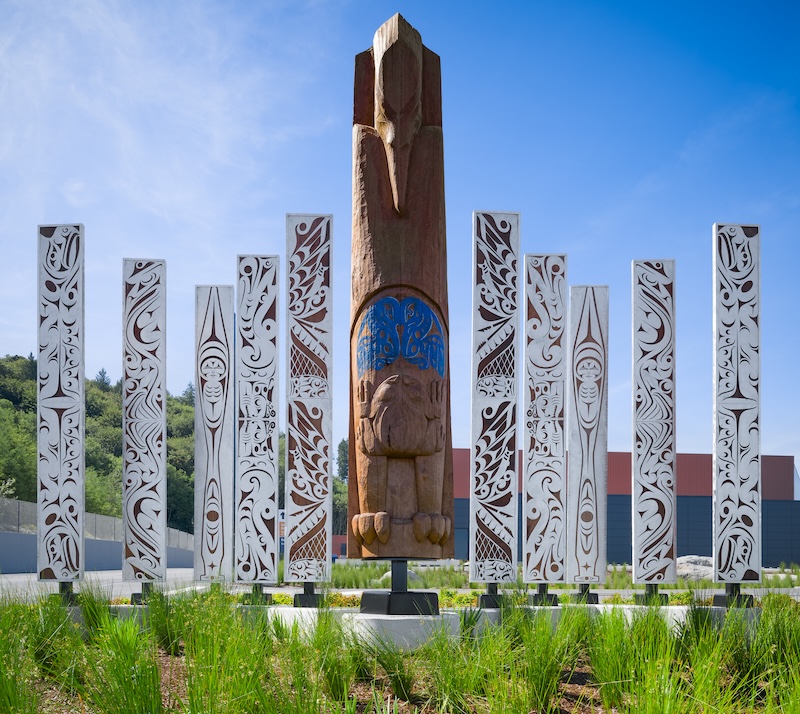
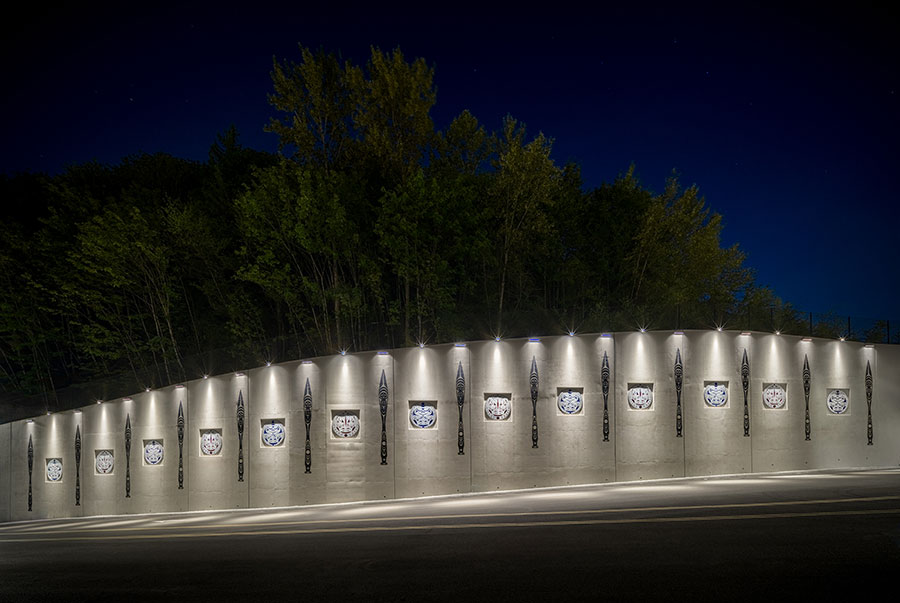
Muckleshoot artists Tyson Simmons, Keith Stevenson, and Sam Obrovac created two monumental artworks for the public approach to the station. A Blue Heron sculpture and a series of medallions and paddles integrated into the entry retaining wall draw upon Tribal teachings, local ecosystems, and enduring cultural relationships to the White River watershed. Together, they reference natural cycles and the interconnectedness of air, land, and water.
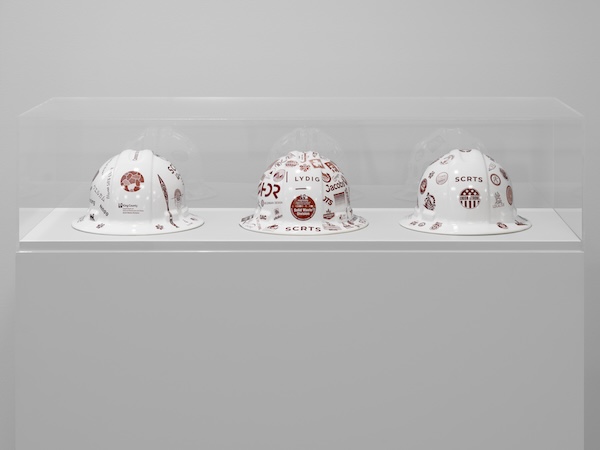
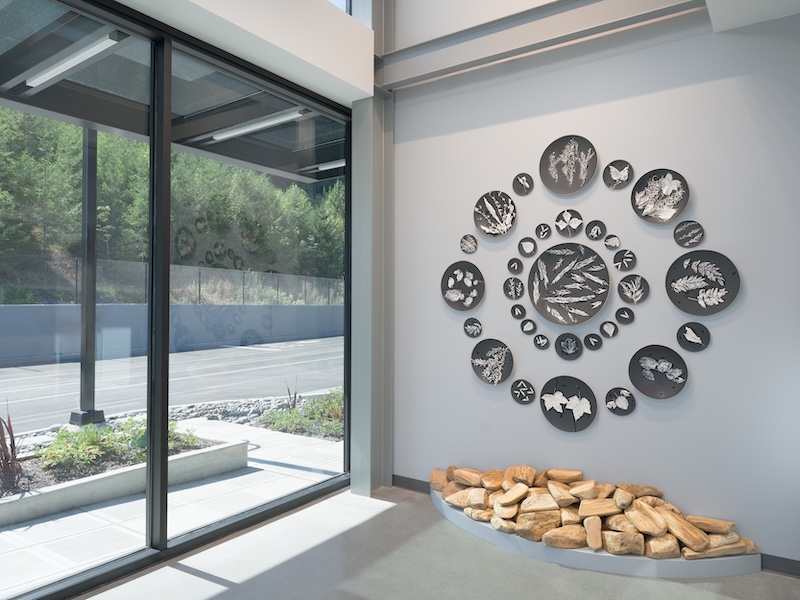
Inside the administration building, artist Evan Blackwell presents two installations that emerged from a multi-year residency. Sense of Place / Sense of Belonging incorporates plants and reclaimed alder gathered from the grounds, while A Hard Hat’s Power of Protection and Expression honors the workers whose labor brought the project to life. Across both bodies of work, Blackwell explores processes of growth, transformation, stewardship, and renewal.
The SCRTS public art program demonstrates how art can deepen our understanding of essential infrastructure. By revealing how ecological, cultural, and human systems converge, the artworks invite visitors to see this facility as part of a much longer story of shared responsibility.